


As we move into 2026, small and medium-sized businesses across the UK are entering another year of uncertainty, pressure and opportunity.
The conversation for SMEs is no longer simply about growth; it is about survival with structure.
Rising operational costs, tighter margins, staff retention challenges, changing compliance expectations and increased customer scrutiny mean business owners can no longer rely on informal systems and reactive management. The businesses that will perform best in 2026 will be the ones that operate with clarity, discipline and resilience.
For many SMEs, the challenge is familiar; wearing too many hats, managing too many moving parts and trying to make strategic decisions without enough time to step back and assess the bigger picture.
2026 should not be the year businesses simply react, it should be the year they reset properly.
Here are the key areas every SME should be focusing on as the year begins.
Stop Running the Business Entirely on Firefighting
Many SMEs spend most of their time solving today’s problems and very little time preparing for tomorrow’s risks; that approach creates exhaustion, poor decisions and unnecessary financial pressure.
Reactive leadership becomes expensive. When business owners are constantly dealing with staffing issues, supplier problems, customer complaints, compliance concerns and cashflow stress, long-term planning disappears.
In 2026, business owners should be asking:
- Do we actually have a business strategy?
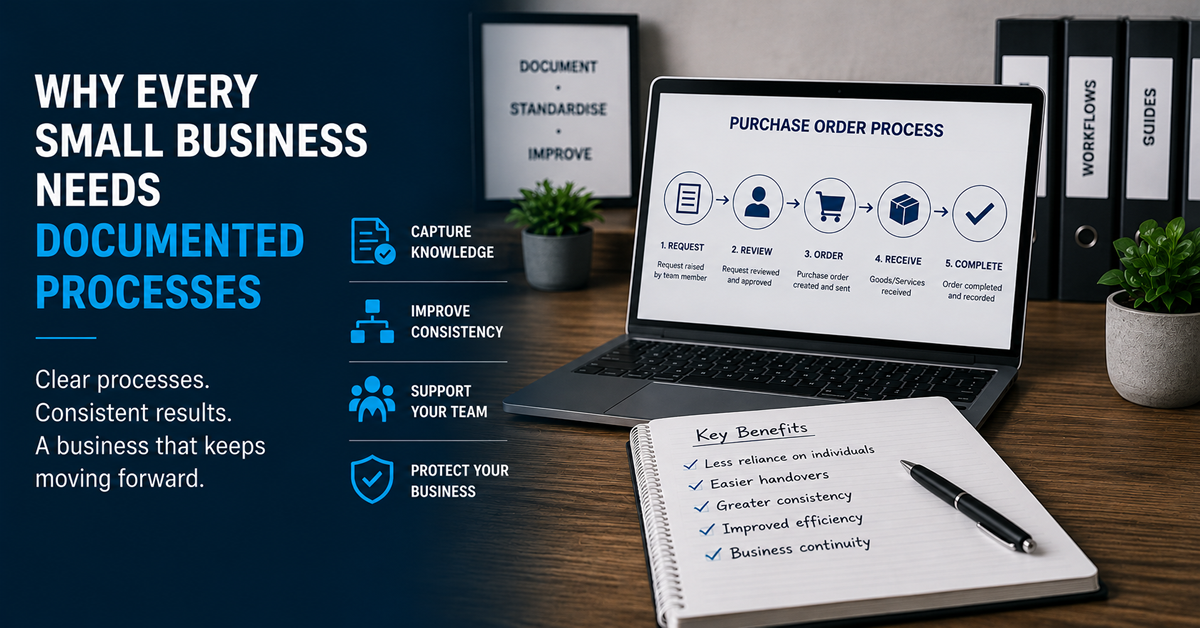
- Are our processes written down or held in people’s heads?
- What happens if a key employee leaves tomorrow?
- Where are we losing time and money unnecessarily?
- Are we scaling problems instead of fixing them?
Operational clarity is one of the biggest competitive advantages for SMEs.
Business consultancy should not be about generic advice; it should create systems that remove friction, improve decision-making and allow leaders to focus on growth instead of constant damage control.
Leadership Development Will Separate Strong Businesses from Struggling Ones
Many SME owners build successful businesses through technical skill, hard work and determination; but leadership requires a different skill set.
Managing people, building accountability, handling conflict, setting expectations and making strategic decisions are often the areas where growth becomes difficult.
Poor leadership creates hidden costs:
- High staff turnover.
- Inconsistent service delivery.
- Unclear responsibilities.
- Poor morale.
- Weak accountability.
- Management burnout.
In 2026, leadership training is not a luxury; it is risk management.
Strong leaders create stable businesses. Owners and managers need practical support, not corporate theory, to improve delegation, performance management, decision-making and organisational structure.
Businesses rarely fail because people work too little, They often fail because leadership systems were never built properly.
HR Problems Rarely Stay Small
For SMEs, HR issues often start quietly.
A difficult employee conversation gets delayed, a poor recruitment decision is tolerated too long, policies are outdated, documentation is inconsistent, a grievance is handled informally instead of correctly, etc.
Then suddenly, the issue becomes expensive.
In 2026, employment expectations continue to rise; businesses without strong HR foundations leave themselves exposed to unnecessary disputes and operational disruption.
Key areas to review include:
- Contracts and Onboarding Processes
- Disciplinary and Grievance Procedures
- Absence Management
- Performance Reviews
- Employee Wellbeing
- Recruitment Strategy
- Management Consistency
Good HR consultancy is not about creating bureaucracy; it is about reducing risk, improving retention and giving managers the confidence to deal with issues early and properly.
People problems are often business problems in disguise.
Compliance Still Matters Even When It Feels Like Background Noise
Many SMEs only focus on compliance when something goes wrong; that is usually too late.
Whether it is GDPR, supplier contracts, internal policies, health and safety expectations, or industry-specific obligations; compliance protects the business long before regulators ever become involved and documentation matters.
In 2026, businesses should review:
- Data Protection Processes
- Privacy Notices and Retention Schedules
- Supplier Agreements
- Staff Policies and Handbook Updates
- Governance Responsibilities
- Audit Readiness
- Evidence of Internal Controls
Clients increasingly expect professionalism before awarding contracts; Good compliance is not just about avoiding penalties – it improves trust, credibility and commercial opportunities.
For many SMEs, better compliance directly supports better sales.
Information Security Is a Business Issue, Not Just an IT Problem
Cybersecurity remains one of the most underestimated risks for smaller businesses and many SMEs still assume they are “too small” to be targeted …they are not!
Phishing attacks, invoice fraud, credential theft, supplier compromise and ransomware continue to affect businesses of every size.
The question is not whether cyber risk exists; it is whether leadership is prepared.
Business owners should understand:
- Who has access to critical systems?
- How customer and employee data is protected?
- What happens if systems go offline?
- Whether staff know how to recognise threats?
- How incidents would be handled under pressure?
Practical cybersecurity support, information security frameworks and realistic risk assessments are now essential parts of SME resilience.
Security is no longer a technical side issue; it is part of responsible business management.
Supplier and Vendor Risk Can Quietly Damage Growth
Many SMEs rely heavily on third parties such as accountants, software providers, outsourced teams, contractors, suppliers and consultants; but very few properly review how much operational risk sits with those relationships.
Questions worth asking include:
- What happens if this supplier fails?
- Do we have alternatives?
- What access do external providers have?
- Are responsibilities clearly documented?
- Are contracts protecting the business properly?
Vendor management is often ignored until a serious disruption happens; in 2026, resilience means understanding dependencies before they become emergencies.
Sustainable Growth Requires Commercial Discipline
Growth without structure creates chaos; many SMEs increase revenue while profitability falls because systems, pricing, staffing and leadership have not kept pace.
Business owners should be reviewing:
- Pricing Strategy
- Profit Margins
- Cost Control
- Service Efficiency
- Client Profitability
- Strategic Investment Decisions
- Long-Term Scalability
Conclusion
2026 will reward businesses that build properly. The SMEs that succeed will not necessarily be the loudest, fastest-growing, or most visible; they will be the ones with strong leadership, clear processes, practical compliance, controlled risk and sustainable decision-making.
Business support should never be about adding unnecessary complexity; it should remove confusion, it should help owners lead with confidence, it should turn uncertainty into structure.
At Stu Walsh Ltd, that remains the focus; helping SMEs create stronger businesses through practical consultancy, leadership support, compliance improvement and operational resilience.
Because successful businesses are not built by chance, they are built by design.
To find out how Stu Walsh Ltd. can support your organisation, please contact me via the form below:
Sources
- Advice for Small and Medium Organisations
- The Data Use and Access Act 2025 (DUAA) – What Does it Mean for Organisations?
- Data (Use and Access) Act 2025: Data Protection and Privacy Changes
- Data Protection by Design and by Default
- ICO Enforcement Actions
- Chartered Institute of Personnel and Development (CIPD) – Labour Market Outlook Spring 2025
- CIPD – Labour Market Outlook Autumn 2025
- CIPD – Effective Leadership and Management in SMEs
- CIPD – Health and Wellbeing at Work 2025
- GOV.UK – Backing Your Business: Our Plan for Small and Medium-Sized Businesses
- Federation of Small Businesses (FSB) – Complete Guide to UK GDPR Compliance for Small Businesses