

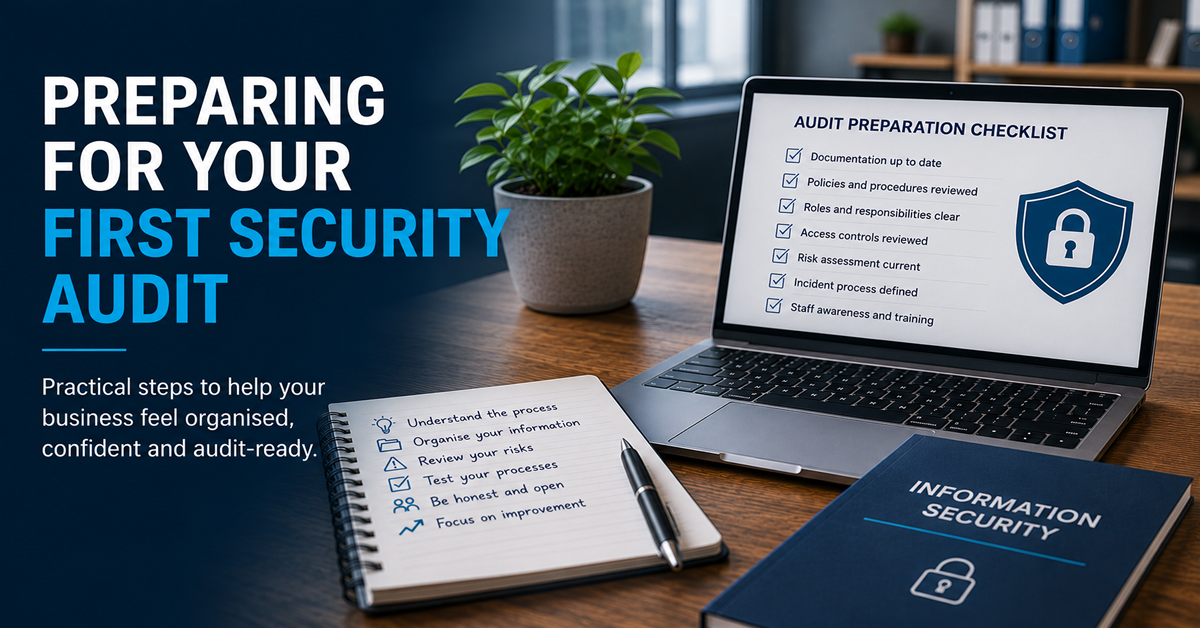
Mention the words security audit and it’s not unusual to see people’s expressions change.
For many organisations, the thought of an audit brings images of difficult questions, lengthy checklists and someone searching for problems.
It’s easy to understand why; security audits are often seen as something to be endured rather than something that can genuinely benefit a business, the reality is usually much less intimidating.
A good security audit isn’t about criticism or catching people out; it’s about understanding how a business works, recognising what’s already working well and identifying opportunities to improve. When approached in the right way, an audit becomes less about compliance and much more about confidence.
Good Preparation Happens Every Day
One of the biggest misconceptions is that preparing for an audit begins a week or two before it takes place; in reality, preparation starts with the way a business operates every day.
The organisations that generally find audits the least stressful aren’t necessarily those with the biggest budgets or the most advanced security systems; more often, they’re simply well organised.
They know where important documents are stored, understand who is responsible for key activities and can explain how their processes work without having to search for answers.
Where audits become more challenging, it’s often because documentation is scattered across different locations, responsibilities have become unclear or procedures no longer reflect the way the business actually operates.
Fortunately, those are all things that can be improved.
It’s Usually Just a Conversation
Many people are surprised by how straightforward a security audit actually feels.
You’re not expected to memorise standards or quote policies word for word.; in most cases, the discussion centres on how your organisation works in practice.
How are new members of staff given access to systems? What happens when someone leaves the business? How are security incidents reported? Who decides who has access to sensitive information?
They’re practical questions because good information security is built around practical day-to-day processes rather than complicated technical language.
The aim isn’t to test your memory; it’s to understand whether the systems and processes you’ve put in place are working as intended.
Perfection Isn’t the Goal
No organisation gets everything right.
Businesses change constantly; new software is introduced, staff move into different roles, suppliers change and processes naturally evolve over time.
That’s completely normal.
An audit isn’t about proving that every process is perfect; it’s about understanding where improvements can be made and ensuring the business continues moving in the right direction.
Being open about areas that still need attention is often far more valuable than trying to present an unrealistic picture of perfection.
Security Is Often About the Little Things
When people think about information security, they often imagine sophisticated cyber attacks or highly technical systems; while those risks certainly exist, many security incidents begin with something much simpler:
- An email sent to the wrong recipient.
- A laptop left unattended.
- An outdated procedure that nobody realised was still being followed.
- Passwords shared because it seemed more convenient.
Individually, they may seem like small issues, but together they can have a significant impact on the security of an organisation.
That’s why security audits spend so much time looking at everyday working practices; technology is important, but it’s people and processes that often make the biggest difference.
Conclusion
Preparing for your first security audit doesn’t have to be overwhelming.
The businesses that approach audits with the greatest confidence are rarely those with the most complex documentation or the largest security budgets; more often, they’re the ones that understand their own processes, keep their information organised and are open about where improvements can still be made.
Rather than trying to impress the auditor, focus on understanding your own business; make sure your documentation reflects the way you actually work, understand where your information is stored and don’t be afraid to ask questions if something isn’t clear.
A good audit should leave you with a better understanding of your organisation than you had before it began; if it does that, it has achieved exactly what it was designed to do.
Practical Support When You Need It
Whether you’re preparing for an audit, improving your documentation or strengthening your day-to-day information security, I provide straightforward, practical support tailored to your business.
Let’s have a conversation about how I can help.